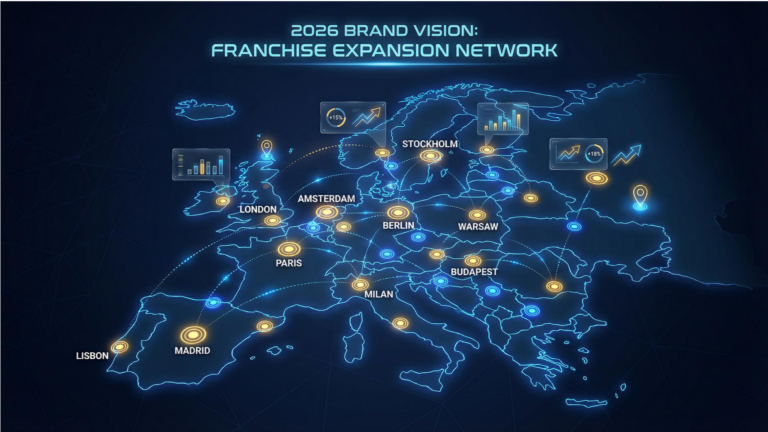

European franchise growth roadmap thinking starts long before your second location opens. Maybe you have built a strong local brand, a bustling café, a popular fitness studio, a unique retail shop, or a thriving service business. Now you are eyeing expansion beyond your hometown and even beyond your home country. Franchising can be the vehicle that transforms a single location into a scalable European franchise brand. Franchising has long been a powerful growth model, and Europe offers fertile ground for expansion (franchising contributes over €300 billion to Europe’s economy annually and over 2 million jobs[1]). As founders who have guided many businesses through this process (Franchise Marketing Systems Europe alone has helped franchise over 700+ brands worldwide[2]), we’ve observed that success comes from following a clear, strategic plan. This article lays out a realistic 24-month roadmap, broken into phases, to go from one location to a multi-market European franchise brand. The tone is founder-to-founder – strategic, grounded, and instructional – drawing on real-world benchmarks and our experience in franchising.
Roadmap Overview
Roadmap Overview: Below are the key phases we’ll cover, each with its timeline, milestones, and pitfalls to avoid:
- Phase 1: Model Development & Feasibility (Months 0–6) – Validate your business model for franchising and lay the groundwork.
- Phase 2: Legal and Operational Setup (Months 6–12) – Build the franchise structure: legal documents, manuals, and systems.
- Phase 3: Pilot Franchise Launch (Months 12–18) – Test the concept with an initial franchise outlet to prove it works beyond the original location.
- Phase 4: Franchise Recruitment & Marketing (Months 18–24) – Start recruiting franchisees and marketing the opportunity across regions.
- Phase 5: Regional Expansion and Scale (Around Month 24 and beyond) – Expand into multiple European markets and set up for sustained growth.
Each phase includes example timelines, benchmarks to hit, and common pitfalls to avoid. Let’s dive into the roadmap.
Phase 1: Model Development & Feasibility (Months 0–6)
In the first 6 months, the focus is on ensuring your concept is franchise-ready. Not every successful local business will thrive as a franchise – you need to confirm that your model can be replicated and is attractive to potential franchisees. Start by evaluating franchise feasibility in depth:
- Prove the Concept: Is your business profitable, with strong unit economics? Ideally, you have at least a couple of years of solid financial performance and a loyal customer base. Franchisees will want to see that a single unit can be profitable and that those results are repeatable.
- Operational Consistency: Document your secret sauce. Begin drafting an operations manual that captures how your business runs – from daily procedures to customer service standards. The goal is to translate your personal expertise into a system someone else can follow. If your business’s success relies entirely on your personal touch or a key chef/employee, that’s a red flag. You may even consider opening a second company-owned location or testing in a new city to see if the concept works without you present.
- Market Demand & USP: Research demand beyond your home market. Are there customers in other cities or countries asking for your product/service? Analyze competitors to ensure your concept has a unique selling proposition that can travel. A franchise needs a clear niche or advantage that isn’t hyper-local. For example, if you run a vegan café in Barcelona, would the concept appeal in Paris or Berlin? Look at broader consumer trends to back up your hunch.
- Brand Strength: Strengthen your brand elements (name, logo, reputation) because franchisees invest in a brand as much as in the business model. Ensure you have a memorable brand story and perhaps start the process of securing trademarks (you’ll later want to register an EU-wide trademark to protect your brand across member states).
- Financial Feasibility: Model the business from a franchisee’s perspective. What would it cost someone to open this in a new location, and what returns can they expect? A rule of thumb is that a franchisee should be able to recoup their investment and reach break-even within about two years[3]. If your model currently requires, say, five years to break even, you may need to tweak costs or pricing. Also, consider what fees you (as franchisor) would charge – we’ll refine this in Phase 2, but start thinking about a feasible initial franchise fee and royalty that the unit economics can support.
By the end of Phase 1 (around the 6-month mark), you should have a franchise business plan or at least a clear blueprint. This includes a defined concept, preliminary operations documentation, a list of needed support systems, and a go/no-go decision on franchising. It’s wise to conduct a franchise feasibility study during this phase – some companies do this internally, or you can work with franchise consultants to analyze your readiness. In our experience, investing time upfront here prevents costly mistakes later. Remember that franchise development itself will require capital and effort; industry analysis suggests initial franchise setup costs typically range from $75,000 to $200,000 for legal, documentation, and marketing materials[4]. Make sure you’re prepared for that commitment if you proceed.
Key Pitfalls in Phase 1 (to avoid)
- Franchising Too Early: Don’t attempt to franchise an unproven or struggling business. A common mistake is assuming that personal success will automatically duplicate. Ensure your success is systemizable – your goal is a business that can run without you there every day. “The biggest mistake is assuming business success equals franchise readiness. Your personal expertise needs to become transferable systems that others can execute consistently”[5].
- Inadequate Documentation: Failing to start documentation early. If you skip documenting processes now, you’ll be scrambling later. Begin writing down how everything works – you’ll polish it in Phase 2, but capture the tribal knowledge now.
- Ignoring Market Differences: Assuming what worked in one location will work exactly the same in another. Even within Europe, consumer behaviors vary. Start researching how you might need to localize the concept (e.g. different language, slight menu changes, etc.) down the line.
- Underestimating Resources: Don’t assume franchising is a low-effort “growth hack.” Franchising can indeed fuel rapid growth by using franchisees’ capital, but it still demands significant time and money from the founder. You’ll need funds for legal fees, branding, and marketing to attract franchisees, and bandwidth to support them. Be realistic about your capacity before moving forward.
Phase 2: Legal and Operational Setup (Months 6–12)
Once you’ve confirmed your business is franchiseable, Phase 2 is about building the franchise infrastructure. This roughly spans months 6 through 12. By the end of this phase, you should have all the pieces in place to actually sell and support franchises. Key components include:
- Franchise Entity & Structure: Decide how you will structure the franchising side of your business. Many founders set up a separate company to be the franchisor (for liability and organizational reasons), though this isn’t mandatory. Work out the basics of your franchise offering: initial franchise fee, royalty percentage, marketing fund contributions, territory model, etc. For reference, in many European franchise systems the initial fee might range from €20,000 to €50,000 and ongoing royalties around 4–8% of sales[6] – but yours should be based on your financial model and industry norms. Ensure the franchise is priced so that franchisees can earn a good living and you can sustain support services.
- Legal Documentation: Engage an experienced franchise attorney (ideally one familiar with multi-country European expansion). They will draft your Franchise Agreement and, if applicable, a Franchise Disclosure Document (FDD) or prospectus. Europe doesn’t have a single unified FDD requirement like the U.S., but some countries have their own pre-sale disclosure laws. For example, France’s Loi Doubin requires giving a detailed disclosure document (Document d’Information Précontractuelle) at least 20 days before signing[7], Italy mandates certain disclosures, and Spain requires franchisors to register with the government[8]. Your legal documents must comply with each target country’s rules and clearly spell out both parties’ rights and obligations (territory, term, fees, training, support, termination clauses, etc.). Don’t copy-paste an agreement from the internet – get a professional. This contract will define your relationship with franchisees for years to come.
- Operations Manual: In this phase, your draft from Phase 1 turns into a polished Operations Manual – effectively, the franchisee “how-to” bible. It should cover daily operations, standards, recipes or service protocols, branding guidelines, customer service procedures, technology systems, reporting requirements, etc. Think of it as the playbook that ensures a customer gets the same experience from any franchise location. This document can easily run hundreds of pages and will evolve, but have a comprehensive version 1.0 ready now. Remember, the manual also needs to reflect reality – don’t describe an idealized operation that you don’t actually practice. As one UK franchise advisor notes, “Agreements that don’t reflect business reality create problems later”[9] – the same goes for manuals. If you claim a process works a certain way, be sure that’s been tested and feasible.
- Training Program: Design an initial franchisee training program. Typically, you might plan a 1-4 week training for new owners at your flagship location or another training site[10]. Outline what topics are covered (e.g. product prep, POS system use, hiring and training staff, local marketing, etc.) and how you will deliver ongoing training (refresher courses, online modules, etc.). If your business involves technical know-how (say a specialized fitness class or a proprietary software), ensure you have a way to certify franchisees in these competencies. Start developing training materials (presentations, videos, checklists) that align with your operations manual. This is also the time to establish support systems – for example, will you have a franchise business coach or field support person who visits franchisees? Plan the support structure that you will provide as franchises come on board (this could include hotline support, a shared services platform, etc.).
- Branding and Marketing Assets: Create the marketing toolkit for your franchise. This includes a franchise marketing brochure or prospectus that you can give to prospects, and a section on your website about franchise opportunities. Gather testimonials or success stories (even if just from your original location’s success) to include. Also, plan how you will promote the franchise opportunity – you might prepare some initial digital ads, listings on franchise portals, or plan to attend franchise expos in Europe. This overlaps with Phase 4, but it’s wise to begin asset creation now so you’re ready to market by the time your pilot is running.
- Intellectual Property Protection: If you haven’t already, file for trademarks in key markets. Using the EUIPO (European Union Intellectual Property Office) system, you can register your trademark to cover all EU member countries in one go[11] – a big advantage for cross-border franchising. Ensure your brand name and logo are protected before franchisees start using them. Also consider patenting any proprietary technology or processes if applicable (though most small franchises rely more on trademark and know-how protection).
By Month 12, you should have a franchise package ready: legally compliant documents, an operations manual, training plan, and a strategy to recruit and support franchisees. In practice, converting an independent business into a franchise system often takes 6 months to a year of preparation[12], which aligns with our timeline for Phase 1 and 2. If you hit delays (quite common, for example legal reviews or writing manuals might take longer), that’s okay – it’s better to get it right than to rush. Many brands spend the better part of a year in development before signing their first franchise. You are building the foundation here for all future growth.
Key Pitfalls in Phase 2
- Skimping on Legal Advice: A huge mistake is using generic contracts or failing to tailor your legal documents to each market. This can lead to unenforceable contracts or even violation of local laws. Always work with a qualified franchise lawyer. Remember, some European countries require specific disclosures or registrations – missing those could stall your expansion or incur penalties.
- Poorly Defined Operations: If your manual or training is superficial, franchisees will improvise – and that leads to inconsistency and brand damage. Avoid leaving gaps in your systems. Test your procedures in-house or via a friendly beta tester. As one checklist advises, test everything with people who don’t know your business – if they can’t get good results following your instructions, neither will franchisees[13][14].
- Not Protecting IP Early: Delaying trademark registration or other IP protection. If you announce your franchise and then discover someone else has a similar name in Germany or Italy, you’re in trouble. Secure your brand name across key markets early in this phase.
- Overcomplicating the Model: On the flip side of not documenting enough, some founders over-design their franchise offering with excessive fees or complex rules that deter potential franchisees. Keep the business model simple and profitable for a franchisee. For instance, charging a royalty, marketing fee, tech fee, etc. is normal, but ensure the costs are justified by the support and that franchisees can still net a strong profit. If industry norm is a 6% royalty and you try to charge 15%, you’ll likely scare away good candidates or set them up to fail. Balance your needs with franchisee economics – franchising only works long-term if both sides win[15][16].
- Forgetting Compliance Differences: Treating Europe as one homogeneous market can trip you up. Each country has unique employment laws, tax considerations, and sometimes franchise regulations. For example, your franchise agreement might need tweaks for UK vs. France vs. Poland. Be ready to localize legal and operational details (like GDPR compliance for customer data across EU, or adjusting contract language for civil law vs. common law systems).
Phase 3: Pilot Franchise Launch (Months 12–18)
With your franchise system built on paper, it’s time to test it in practice. Phase 3 (approximately months 12 to 18) revolves around launching your pilot franchise – the first franchised location (outside of your original unit) that operates under the new franchise system. This is a critical step that validates your concept’s replicability and helps fine-tune the model before you scale up franchise sales.
There are a couple of approaches to a pilot:
- Internal Pilot: Some companies opt to open a second location themselves (or with a manager as a quasi-franchisee) to simulate the franchise experience without actually recruiting an outside franchisee. They run the new unit with the same constraints a franchisee would have – paying royalties into a separate account, following the manual to the letter, operating at arm’s length from the founder – to see if the business works when the original team isn’t directly running it. This can be useful if you couldn’t find a perfect first franchisee right away or if you prefer to have a company-owned training store in another market.
- Franchisee Pilot: More commonly, you recruit your first pilot franchisee. Often this might be someone you know or a very eager early adopter who perhaps approached you even before you formally started franchising. Be extremely selective here – the ideal pilot franchisee is capable, aligned with your values, and understands that they are a pioneer with all the ups and downs that entails. You might offer them a slight incentive (like a discounted franchise fee or extra support) since they are effectively helping you prove the model.
Whichever route, choose a pilot location that sets you up for future success. It might be in your home country to minimize variables, or it could be in a nearby country if international expansion is the main goal and you already have interest from there. For example, if your home base is in London, you might pilot in another UK city first; if you’re in a smaller European country, you might pilot in a culturally similar market elsewhere (a Dutch concept might pilot in Belgium, for instance). Ensure this location can truly test your concept’s portability.
Execute the Launch: When the pilot franchise opens, treat it as the blueprint for all franchises to come. Help the franchisee (or your internal team) follow your systems rigorously. This is essentially a dress rehearsal: your training program is delivered in full, the new unit operates using your playbook, and you start collecting performance data. Expect to learn a lot in this stage – perhaps your training didn’t prepare them for a certain real-world challenge, or the ops manual had gaps. That’s normal. Gather feedback diligently and be ready to iterate. If the franchisee deviated from the system, find out why – was something unclear or impractical? Update your documentation and training based on these insights.
Measure Success: Track key metrics of the pilot unit against your original location. How long did it take to break even? What revenues in month 3? Is customer feedback consistent? This becomes proof for selling future franchises. Strong pilot results will be one of your best sales tools (“Look, the concept works in a different city and produced €X in sales in its 6th month”). On the other hand, if the pilot underperforms, you may need to pause and address issues before expanding further. It’s better to fix problems now than to have five underperforming franchises later.
Importantly, the pilot should demonstrate that your model works without your direct daily involvement. As one expert puts it, “Franchise readiness is not paperwork. It is proof that a franchisee can open, trade and grow on a clear plan backed by real numbers.”[17] In other words, until you have a successful pilot, you’re not truly ready to scale franchise sales. Many founders, in their excitement, skip or rush this phase – try not to. Even if it means your first franchise opens at month 15 instead of month 12, that’s okay. Use the time to get it right.
Key Pitfalls in Phase 3
- Choosing the Wrong Pilot Partner: The first franchisee can make or break your early momentum. Avoid picking someone just because they have money or are a friend/family member who’s interested. In fact, don’t rely on family or close friends for pilot testing – you need objective feedback and a franchisee who will be honest about issues[18]. Choose a pilot operator who has a high chance of success (relevant industry experience or business savvy) and who believes in following a system. A bad first franchisee – one who doesn’t follow the model or who fails due to incompetence – will force you to spend time putting out fires instead of growing, and it won’t provide a good case study.
- Insufficient Support: Treat your pilot franchisee like gold. This is your learning lab. If you neglect them, they could falter. Be hands-on: frequent check-ins, on-site visits, extra coaching. You’re not just supporting them; you’re refining the blueprint for you. Conversely, be careful not to smother them or constantly change the rules – let them run the playbook and see how it performs.
- Misinterpreting Data: When evaluating pilot results, take a balanced view. If something went wrong, identify whether it’s a one-off issue with that operator/location or a systemic problem. For example, if sales are low, is it because that franchisee didn’t execute the marketing plan well (individual issue) or because the concept has less demand in that locale (potential concept issue)? Be honest with yourself about what needs improvement.
- Rushing to Sell More Franchises: Perhaps the most common pitfall – the moment a pilot shows even a glimmer of success, founders sometimes try to sell franchises aggressively to anyone who will listen. Resist that urge until you have at least a few months of solid data and you’ve ironed out the major kinks. Those early franchise buyers are taking a risk on an unproven system; if you bring them on too soon and they become unhappy or fail, it will stunt your growth and tarnish your reputation. Use the pilot phase to build a strong foundation and success story that will attract better franchisees in Phase 4.
Phase 4: Franchise Recruitment & Marketing (Months 18–24)
Armed with a successful pilot and a refined franchise system, you’re now ready for Phase 4 (approximately months 18 to 24): recruiting franchisees and marketing your franchise opportunity. This is where you start to scale beyond a one-off pilot and truly become a franchisor with a growing network. The goal by the end of this phase is to sign up additional franchisees (possibly in multiple markets) and set them up to launch, thereby expanding your brand’s footprint.
Franchise Marketing Strategy: Begin by developing a clear marketing strategy to attract potential franchise investors. Leverage the pilot success: incorporate its results and testimonials into your franchise marketing materials. Ensure your franchise landing page or website section is polished, informative, and easy to find. It should communicate your concept, the franchise offer (investment required, training provided, support, etc.), and have a way for interested parties to contact you. Use multiple channels to get the word out:
- Online Lead Generation: Use targeted online ads (Google, LinkedIn, Facebook) aimed at markets or profiles of likely franchisees (e.g., professionals in your industry, or entrepreneurs in neighboring countries looking for new opportunities). Content marketing can help too – write articles or blogs (like this one!) showcasing your expertise and success.
- Franchise Portals and Brokers: Consider listing your opportunity on European franchise directories or portals. In Europe, many prospects browse portals like Franchise Direct, Franchise Europe, etc. You can also engage franchise broker networks or consultants who, in our experience, can introduce vetted prospects (they often charge a success fee, but can accelerate early sales).
- Trade Shows and Events: By this stage, you might attend franchise expos (there are major franchise shows in London, Paris, Frankfurt, etc.). Exhibiting at these can give you exposure to a wide range of potential franchisees and even master franchise candidates. Just be prepared – have brochures ready, maybe the founder (you) present to pitch, and possibly an existing franchisee (like your pilot) joining to share their positive experience.
- PR and Word of Mouth: Use PR to announce that you are now franchising. Local business media might cover the story of your expansion, which can attract inquiries. Also, don’t underestimate word-of-mouth – your own customers might know people in other cities who’d love to open your concept. Encourage your network to spread the news.
Franchisee Qualification: Marketing will generate leads – but signing franchisees is not simply “first come, first served.” You must vet and select franchise partners carefully. Establish a recruitment process with stages: an initial call or meeting, an application or questionnaire, review of their finances and experience, a Discovery Day (where they visit your operation), and so on, before any contracts are signed[19]. Create criteria for your ideal franchisee: e.g., minimum capital, relevant background, passion for the brand, etc. This ensures you bring on partners who are more likely to succeed. It typically takes several weeks or months from first inquiry to a signed agreement – industry figures say 3 to 6 months is common from first contact to closing a franchise deal[20], since candidates will be conducting their due diligence and you’ll be vetting them. Plan accordingly; if your goal is to have, say, five new franchises signed by month 24, you need to start filling the pipeline early in this phase.
Initial Franchise Sales: As candidates progress, don’t feel you must grant franchises in distant markets immediately. A prudent approach might be to focus on a region (for example, start franchising in your home country or a couple of nearby countries first) to cluster growth and simplify support. However, if a strong prospect comes from a farther country and is exceptionally qualified (or if your concept is unique enough to draw international interest early), you can consider awarding a master franchise or area development agreement for that territory – more on that in Phase 5. Each new franchisee you sign in this period should go through your training program (likely you’ll schedule training sessions as needed or in small groups) and then move toward opening their unit, which might happen during or after this 24-month roadmap timeframe. It’s okay if some openings occur slightly beyond month 24; the key by month 24 is to have deals signed and the expansion trajectory confirmed.
Support & Onboarding: Alongside recruitment, you need to support new franchisees through site selection, build-out, and launch. This is where having a solid team or at least a well-structured process is vital – you might still be a small franchisor, but to the new franchisee, you are their guide and mentor. Provide them with checklists for pre-opening tasks, assist in reviewing their location choices, and ensure they order equipment and inventory per your specs. Essentially, replicate the launch process you did with the pilot, now possibly with multiple franchisees at once. Set up regular communications (maybe a weekly call) with each to monitor progress and address issues. Your reputation will grow with each successful opening, which in turn fuels more franchise sales (success breeds success).
Key Pitfalls in Phase 4
- Lowering Your Standards Under Pressure: It’s tempting when you have aggressive growth targets or when interest is slow to loosen your franchisee criteria (e.g., accepting someone with borderline finances or someone you sense isn’t a cultural fit). This can backfire horribly – a franchisee who struggles or conflicts with you will consume time and could damage the brand. Stick to your ideal candidate profile and don’t be afraid to say no. One well-aligned franchisee is worth more than three poor-fit ones.
- Inadequate Lead Follow-Up: Marketing leads is just the beginning. If you don’t respond quickly and professionally to inquiries, good prospects will lose interest. Make sure you have a system (even if it’s just you calendaring follow-ups diligently) to respond to every inquiry, send them an info packet, and guide them through the next steps. This is where an organized sales process is key – manage it like a sales funnel. If needed, invest in a simple CRM tool to track leads.
- Overselling and Misrepresenting: When you’re excited about expansion, there’s a risk of overselling the opportunity. Be honest and transparent in your marketing. Provide accurate data (from your pilot and original unit). Don’t promise that franchisees will “get rich quick” or give unrealistic earnings projections. Not only can that lead to unhappy franchisees, it can also land you in legal trouble. Ethical franchising builds trust: it’s better to under-promise and over-deliver for your first few franchisees, turning them into strong references.
- Stretched Thin: Managing recruitment and supporting new openings at the same time is a juggling act. Many founder-franchisors at this stage find themselves working 7 days a week handling inquiries, negotiating deals, and then helping new franchisees launch. Know your limits. If possible, delegate within your team or hire support – maybe a franchise sales coordinator or a field support trainer – to share the load. If you burn out, the whole expansion will suffer.
- Ignoring Cultural Differences: As you start signing up franchisees in different regions, be mindful of cultural and language differences. Your recruitment approach might need tweaking by country. For instance, franchise buyers in Germany might expect more detailed financial data and be more skeptical of hype, whereas in Southern Europe personal relationship and brand story might carry more weight. Adapt your approach and materials to resonate with the audience in each target market.
Phase 5: Regional Expansion and Scaling Across Europe (24+ Months)
By the time you reach the 24-month mark, if all has gone to plan, you have a handful of franchises operating or about to open, and your brand is no longer single-site – it’s a burgeoning franchise network. Phase 5 represents the transition from those first few units to a regional (multi-country) franchise brand. In reality, Phase 5 often begins as you approach the end of the 24-month timeline and then continues into the years beyond. We include it here to illustrate how your role and strategy evolve as you scale.
Crossing Borders: To become a European franchise brand, you need to operate in multiple countries. Assuming you started in one country, now is the time to intentionally target expansion into 1-3 additional European markets. This could happen via direct unit franchising, area developers, or master franchise agreements: – Direct Unit Franchising: You continue to sell individual franchises in new countries and support them directly from your home office. This can work for nearby markets or those with the same language (for example, a Spanish franchisor expanding into Portugal might handle it directly, or a German franchisor supporting units in Austria/Switzerland). It gives you more control but also can stretch your support if distances and language differ significantly[21]. – Area Development Agreements: Here, you grant a franchisee rights to open a series of units in a territory (e.g., one franchisee commits to open 5 units across Scandinavia within 3 years). This can lead to faster growth and ensures a motivated partner in that region[22]. You might use this in larger countries or regions where you want one strong partner rather than many separate franchisees. – Master Franchising: This is a common route for international expansion. You find a partner in the target country who becomes essentially the franchisor for that country – they will open sub-franchises and handle local support. For instance, you might sign a master franchisee for France who will open and/or sell franchises across France (in return, they typically pay you an upfront fee and share ongoing royalties). Master franchising lets you leverage local expertise and capital to expand more rapidly[23]. The downside is giving up some control and a chunk of revenue, so choose masters carefully and ensure they are well-aligned and trained in your system.
At this stage, localization becomes crucial. Europe is highly diverse – consumer preferences, languages, and regulations vary by country. Plan to translate important materials (operations manuals, training content, marketing assets) into local languages as needed. Adapt your product or service to local tastes where appropriate. For example, a burger franchise expanding from the UK into Italy might need to tweak its menu or sourcing to meet Italian consumer expectations. As noted earlier, marketing that succeeds in one country may not resonate in another; you must tailor your branding and messaging to each culture[24]. In our experience, brands that show respect for local culture and preferences tend to be more readily embraced by both franchisees and customers. One advantage you have is the borderless nature of the EU for trade – once you’re established in one EU country, moving goods or even capital to another is relatively smooth due to harmonized trade regulations[25]. However, remember that legally you’ll still need to comply with each country’s franchise laws (if any), as discussed in Phase 2, and possibly register your FDD/agreements in those jurisdictions.
Strengthening the Support Network: As you grow across Europe, think about how you will support an expanding network. The kind of hands-on support you gave your first few franchisees might not scale when you have 20+ franchises in 5 countries. It may be time to hire additional support staff – for instance, regional field managers who can visit locations, a training director, and a franchise marketing manager to coordinate campaigns for the network. You might establish a small European regional office or at least make frequent trips to your new markets to build relationships. Also consider technology to bridge distances: invest in good communication tools, an intranet or franchisee portal for sharing updates and best practices, and maybe a learning management system for ongoing training. Peer learning can be powerful too – encourage franchisees to share insights with each other (perhaps set up a forum or regular group calls). Essentially, by the end of this phase, you are transitioning from scrappy “founder with a few franchises” to a more structured franchise organization.
Scaling Operations and Supply Chain: More franchises mean greater demand on your supply chain. Evaluate whether your current suppliers and logistics can handle multi-country distribution (especially if you supply any proprietary products or ingredients). Europe’s infrastructure is generally strong, but if you have franchisees in, say, both the EU and non-EU countries (e.g., an EU-based franchisor expanding to the UK or Switzerland), be mindful of customs, VAT differences, and potential delays[26]. Some franchisors set up local sourcing for each region to reduce complexity. Maintain quality control as you diversify suppliers.
Continuous Improvement: With a larger network, establish systems for gathering data and feedback. Track franchisee performance closely – unit economics, customer satisfaction, etc. – to spot issues early. The data will guide further improvements to your system, marketing, or even which markets to focus on. Also, continue to refine your franchise offering from what you’ve learned: perhaps you adjust the franchise fee or support structure based on what’s working best. Franchise development is an ongoing process of improvement; even at 50 or 100 units, the best franchisors keep evolving their model to support their franchisees better.
Celebrating Milestones and Social Proof: As you hit regional scale, don’t forget to use milestones as marketing assets. Press release when you sign a master for a new country or when you open the 10th franchise unit. Prospective franchisees love to see momentum and credibility. Highlight that your brand is now in, say, 5 countries – this builds social proof that yours is a successful concept with broad appeal.
Key Pitfalls in Phase 5
- Expanding Too Fast, Too Soon: Rapid multi-country expansion is exciting, but expanding faster than your support infrastructure can handle is a recipe for disaster. It’s often wiser to solidify presence in a few markets and make them successful before adding more. Each new country has a learning curve. We’ve seen brands that sold master franchises in 10 countries within two years, only to have half of them fail because they couldn’t support them properly or the partners weren’t right. Growth is good, but sustainable growth is better.
- One-Size-Fits-All Approach: Failing to adapt to local market needs. What works in one country might need modification elsewhere – whether it’s marketing tactics, store design, or even the business hours. For example, a fitness franchise found that its 24/7 gym model needed staffing adjustments in markets where unstaffed night hours weren’t trusted by customers. Listen to local feedback and be willing to allow some localization (within reason) to maximize each unit’s success.
- Master Franchise Missteps: If you go the master franchise route, be cautious with whom you grant those rights. A pitfall is signing a master partner who is enthusiastic but under-capitalized or inexperienced – they may not execute well, and you could lose an entire country’s potential. Another issue is not providing enough training and oversight to masters; they are essentially an extension of your brand. Treat master franchisees like major partners – train them thoroughly, maintain regular communication, and ensure they are representing the brand correctly. It can help to structure agreements with performance clauses (e.g., they must open X units in Y years) so that a master doesn’t just pay a fee and then sit idle, locking you out of that market.
- Regulatory Overlook: As you span countries, ensure you continuously monitor and comply with local regulations – franchise laws, but also things like data protection (GDPR is EU-wide but implementation can vary), consumer protection laws, etc. Update your legal documents for each jurisdiction. Also be aware of currency exchange issues – if you charge royalties in your home currency but franchisees operate in another, fluctuations can affect them or you; some franchisors end up localizing fees (e.g., franchisee pays a fixed royalty in local currency equivalent). Small details, but important for smooth operations.
- Complacency: Hitting 10 or 20 units in multiple countries is a great achievement. But don’t let success breed complacency. Continue to solicit feedback from franchisees, invest in new product development or tech enhancements for the system, and stay ahead of competitors. Franchising in Europe remains competitive and dynamic, growing ~4-5% annually in recent years[27] – to remain a top brand, you should keep innovating and supporting your network.
Conclusion: Building a Thriving Pan-European Franchise Brand
Transforming a single-location business into a multi-market European franchise within 24 months is a challenging endeavor – but with a strategic roadmap and relentless execution, it’s certainly achievable. By following the phased approach outlined above – from rigorous groundwork and pilot testing to careful franchisee recruitment and scaled expansion – you set your brand up for sustainable growth rather than quick failure. Each phase builds on the last: skipping steps (or rushing through them) can undermine the whole structure. But done right, franchising allows you to leverage the capital and energy of local entrepreneurs to grow far beyond what you could do alone, all while maintaining the essence of what made your concept successful.
In our experience at FMS Europe, the founders who thrive in franchising are those who combine vision with discipline. They dream big (seeing their brand in dozens of cities across Europe) but also sweat the details (ensuring every franchisee is trained, supported, and profitable). They avoid the pitfalls we mentioned and treat their franchisees as true partners in the brand’s success. It’s also important to remember that franchising is a learning process – you’ll continue to refine your model with each new market and each new franchisee. Stay open to learning and adapting.
Lastly, don’t be afraid to seek expertise. Even with this roadmap, franchising can be complex, especially when navigating international expansion. Engaging experienced franchise consultants or mentors (for example, our team at Franchise Marketing Systems, which has worked with hundreds of brands globally[2]) can provide valuable guidance, whether it’s crafting strategy, legal compliance, or lead generation. As a founder, your time is precious – getting a bit of help on the franchising mechanics can free you to focus on high-level leadership and making your brand vision a reality.
Your journey from one location to a European franchise brand will have twists and challenges, but it’s one of the most rewarding paths a business owner can take. Imagine seeing entrepreneurs in different countries passionately carrying your brand’s flag, and customers thousands of kilometers away enjoying what you created – that’s the power of franchising. With a solid 24-month roadmap and a commitment to quality at every step, you can turn your local success into a growing international franchise network. Here’s to your expansion and the new chapter of growth ahead – in multiple languages and markets, but with one shared brand vision. Bonne chance, viel Glück, and best of luck on your franchising journey!
Sources
[1] [2] [6] [7] [8] [11] [21] [22] [23] [24] [25] [26] [27] Franchising in Europe: Expanding Your Brand with Franchise Marketing Systems Europe – Franchise Marketing Systems
[3] Franchise Readiness Evaluator for Local Business
https://www.quick2chat.com/prompt/franchise-readiness-evaluator-for-local-business
[4] [15] [16] Best Franchise Consultants 2025: Franchise Facts According to AI
https://bigskyfranchiseteam.com/best-franchise-consultants-2025-franchise-facts-according-to-ai/
[5] [9] [10] [13] [14] [17] [18] [19] FRANCHISE READINESS CHECKLIST UK | Familia
https://wearefamilia.co.uk/franchise-readiness-checklist-uk/
[12] [20] What is Franchise Development? | FranNet
https://frannet.com/resources/canadian-franchises/what-is-franchise-development/