Introduction
European franchise growth often starts with a strong local brand. Maybe you run a bustling café, a popular fitness studio, a unique retail shop, or a thriving service business. Now you are eyeing expansion beyond your hometown and even beyond your home country. Franchising can be the vehicle that transforms your single or multi unit success into a true European franchise leader. Many founders have traveled this path, from humble beginnings to hundreds of locations, by following a strategic growth playbook. For example, The Body Shop started as one shop in 1976 and expanded to 700 outlets by 1991 through franchising[1]. The journey requires more than ambition – it demands careful preparation, systematization, testing, and disciplined scaling. This guide, written founder-to-founder in tone, will walk you through each step of the franchising playbook, from assessing readiness to pacing your expansion, in a strategic yet accessible way. Whether you’re in food, fitness, retail, or services, the core principles remain the same. Let’s dive into the growth journey from local hero to regional franchise champion.
1. Assessing Franchise Readiness
Before you franchise, take an honest look in the mirror: Is your business truly ready to replicate and scale? Franchising is not a magic wand for growth; it’s a new business model in itself. Founders who successfully franchise make sure they have a solid foundation at home first. This means a proven concept (profitable, with strong customer demand) and operational stability. Ask yourself: Would your business thrive in a city where you aren’t personally there to run it? If the answer is “not yet,” focus on strengthening your core operations and brand before franchising.
- Consistent Profitability: Your unit economics should be attractive for a franchisee. A history of healthy profit margins and ROI will inspire confidence.
- Distinct Brand & Concept: Ensure your brand offers something unique that can stand out in multiple markets. A compelling USP (unique selling proposition) and strong brand identity are crucial.
- Demand Beyond Local: Gauge interest beyond your current location. Do you already get inquiries from other cities or countries? Organic interest can indicate readiness.
- Operational Know-How: You, as the founder, must deeply understand what makes the business succeed so you can teach it. If success relies purely on your personal touch or local relationships, franchising will be hard.
Action Check – Are You Ready?
Action Check – Are You Ready?
Evaluate if you have:
– A track record of success that can be duplicated by others (not just a one-off lucky location).
– Sufficient capital or resources to invest in franchise development (legal fees, documentation, training setup, etc.).
– The ability to support others: Franchising shifts your role from day-to-day operator to mentor and systems builder for franchisees. Make sure you’re ready for that transformation.
Being “ready” also means being prepared to let go of some control. Your franchisees will be independent owners – you must be comfortable empowering them while maintaining standards. Remember, many great European franchises started with a founder asking these tough questions early. An unbiased franchise feasibility assessment (often offered by consultants) can help validate if your business checks the right boxes. It’s better to pause and prepare than to push a half-baked franchise program that could fizzle out.
2. Systemisation: Build Your Franchise Infrastructure
Once you’re confident in your concept’s readiness, the next step is systemisation – turning your business into a repeatable system. Franchising is all about consistency. As one franchise expert notes, “Successful franchising depends heavily on standardization.”[2] The goal is to package your know-how, so even someone in another city or country can deliver the same experience that made your original location successful.
Start by documenting everything. Create an operations manual that covers all aspects of running the business – from daily opening checklists and customer service protocols to supply ordering, marketing tactics, and even how to handle an unhappy customer. This manual will be your franchisees’ bible. Alongside, develop a training program to teach new franchise partners these systems (think initial training sessions, on-site coaching, and ongoing e-learning resources).
Equally important is brand consistency. Ensure you have clear brand guidelines – logo usage, store design, product/service quality standards – so that every new unit looks and feels like part of the same family. Research shows that consistent branding can increase revenue significantly[2], because customers trust a brand when it’s the same wherever they go. For instance, if you franchise a cafe, a customer in Paris or Prague should recognize the ambiance, menu quality, and service style that made your original location special.
Key Systems to Prepare
- Key Systems to Prepare:
- Operations Manual: Step-by-step procedures for running the business.
- Training Modules: Structured training for franchisees and their staff (initial and ongoing).
- Supply Chain: Ensure you can supply franchisees with inventory or connect them to approved suppliers. Bulk purchasing agreements can help maintain quality and reduce costs system-wide.
- Technology Platforms: Consider what tech can help maintain consistency – e.g., a unified POS system, an intranet or franchisee portal for communications, or software for reporting and support.
- Quality Control Processes: Plan how you will monitor and support franchisee operations (regular audits, mystery shoppers, customer feedback channels).
Systemisation might feel like extra work on top of running your business, but it’s the backbone of a scalable franchise. A great example comes from the fast-casual restaurant world: France’s Pitaya (a Thai street food chain) credits its scalable operational model and well-honed systems for its ability to expand from a single outlet to over 70 restaurants across multiple countries in just a decade[3]. By standardizing everything – recipes, supplier standards, training of wok chefs – Pitaya ensured that each new franchise could “hit the ground running” with a proven playbook[4].
Invest time in getting your systems right. As Chris Conner, President of Franchise Marketing Systems (FMS), puts it: “Stable franchise growth isn’t about how fast you can expand, it’s about how strong your foundation is.”[5] A robust foundation of systems will enable you to grow faster later, with fewer hiccups.
3. Pilot the Concept: Prove It Works Outside Home Turf
Before you embark on full-fledged expansion across Europe, it’s wise to pilot your franchise model. Think of this as a dress rehearsal for franchising. The idea is to test your concept in a new location (or with a first franchisee) to ensure your systems and support hold up when you’re not the one at the wheel day-to-day. Many experienced franchisors will tell you that the first few franchise units teach you a lot – you’ll discover kinks in your training, holes in the manual, or marketing tactics that don’t translate to a different locale. Better to learn and fix those early.
There are a couple of approaches to piloting
There are a couple of approaches to piloting:
– Open a Company-Owned Unit in a New Market: Some founders choose to personally open another location in a different city or region as a proof of concept. This way, you test the replicability while still having direct control. Once it’s successful, that location can even serve as a training site for future franchisees.
– Recruit a Pilot Franchisee (or a Few): Alternatively, carefully select one or two initial franchise partners (perhaps in nearby cities) and work very closely with them. Be transparent that they are early adopters and you’ll be evolving the system together. Often, offering a slightly reduced franchise fee or extra support in exchange for their feedback can sweeten the deal. These pilot franchisees become your case studies and champions if all goes well.
During the pilot phase, measure everything. How is the new unit performing in sales compared to your original? What feedback do customers give? How smoothly did the franchisee follow your processes? Their success (or struggles) will help refine your model. It’s better to correct course after 1–2 units than after 20.
For example, Pitaya first established a dense footprint across France (its home market) before aggressively expanding abroad[6]. By perfecting the model in multiple French cities, the founders could confidently claim the concept works “in any city” – a strong selling point for international franchisees. Only then did they push into other European countries (and beyond), armed with the lessons from their pilot locations[6].
If your business is in a sector like hospitality or retail, you might even consider a joint venture or partnership for the pilot in a foreign market. Perhaps you team up with a local operator to open the first unit in that country (this can help navigate local customs and reduce risk). As an example, some U.S. brands entering Europe open a flagship company-owned store in, say, London or Paris to test the waters and build brand awareness, before franchising locally[7].
Takeaway: Treat your first expansions as learning opportunities, not just profit centers. Be ready to adapt: you might tweak your store layout, adjust pricing, or enhance training based on pilot feedback. It’s a lot easier to make changes early than after you’ve sold dozens of franchises. When your pilot franchises are thriving, you’ll have proof for other prospective franchisees (and for yourself) that the model truly works beyond your backyard.
4. Franchisee Recruitment: Finding the Right Partners
With a solid foundation and a successful pilot under your belt, you’re ready to recruit franchisees in earnest. This is a critical step – your franchisees will be the co-owners of your brand’s future. A common mistake founders make is to focus on quantity over quality when recruiting. It’s tempting to award franchises to the first people who show up with a check in hand. But remember: a franchise system’s strength comes from strong franchisees who share your passion and meet your standards. One wrong partner can damage your brand’s reputation, especially early on.
What should you look for in a franchisee? Beyond the obvious requirement of sufficient capital, prioritize fit and capability:
- Shared Values and Passion: The best franchisees genuinely believe in your concept and values. They should be as excited about your brand’s mission as you are. Whether it’s a love for fitness, a zeal for customer service, or a commitment to quality, alignment in mindset is key.
- Operational Skills: While franchisees don’t need experience in your exact industry, they should have some business or management acumen. Running a unit – whether a restaurant, gym, or shop – requires leadership, problem-solving, and people skills. Determine what background or skills are ideal (e.g., if franchising a restaurant, you might favor candidates with hospitality or retail experience).
- Willingness to Follow the System: Entrepreneurs often have big egos – but a franchisee must be willing to follow your established system rather than reinvent the wheel. Look for those who are coachable and team players; they respect that the franchise playbook is there for a reason. An independent maverick who resists your standards will cause friction.
- Local Market Insight: This is a bonus – franchisees who know their local market can help your brand adapt and thrive there. For instance, a franchisee from Munich might have great insights on German consumer preferences that can enhance the whole system. Treat recruitment as a two-way street: they’re evaluating you, but you should evaluate them just as rigorously.
How to attract great franchisees? This involves marketing your franchise opportunity smartly. Develop a clear franchise prospectus or brochure that outlines the business model, support provided, financial requirements, and the success story of your pilot locations. Highlight the strengths of your brand (e.g., “#1 vegan cafe in our city, now ready to expand” or “proven boutique fitness concept with year-round demand”). Use multiple channels: franchise portals, industry trade shows, webinars, and networking through business associations. Often your best first franchisees might even be loyal customers or employees who know the brand – don’t overlook them.
When prospects come knocking, have a structured selection process. This might include an application form, interviews, reviewing a business plan from the candidate, and inviting them to a “Discovery Day” at your headquarters or flagship location to meet you and see the operation upfront. Taking these steps helps ensure you and the candidate are a mutual fit.
Recruitment Tips
- Recruitment Tips:
- Be transparent about costs and expectations. Surprises later will sour the relationship.
- Don’t oversell or exaggerate. Instead, present facts (e.g., average unit sales, break-even timelines) backed by your pilot data. Honest communication builds trust.
- Consider starting with close-to-home markets first. It can be wise to recruit franchisees in regions or countries close by (or culturally similar) for easier support in the early stage. Success in those markets can then be showcased elsewhere.
Finally, think long-term: you’re essentially entering a business marriage with your franchisees, often for 5, 10, or 20 years. Choose partners you can envision working with constructively over the long haul. The founders of 100 Montaditos (a Spanish restaurant franchise) understood this – as they expanded from Spain into new countries, they partnered with franchisees who could embody the brand’s fun, affordable ethos. The result? Over 350 restaurants in Spain and nearly 100 more across Europe and the Americas by choosing the right people to grow with[8].
5. Market Prioritisation: Choosing Where to Expand
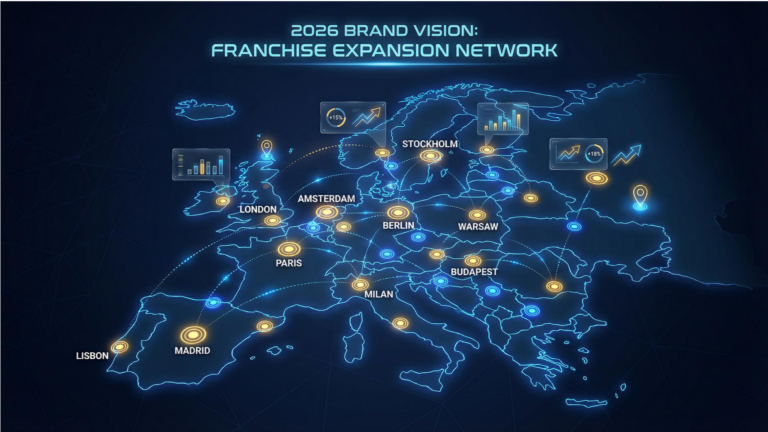
Europe is a rich tapestry of markets – 44 countries, hundreds of cities, each with its own consumer habits and regulatory quirks. As a founder, you need to strategically prioritize which markets to tackle and in what order. Going “European” all at once is usually not feasible (or wise). Instead, think of a phased expansion: maybe start in your home country (scaling regionally), then neighboring countries or those with high demand for your concept, and later farther-flung markets. But how do you decide?
Factors to Consider for Market Selection
Factors to Consider for Market Selection:
- Cultural and Market Fit: Research where your concept might resonate most. For instance, a vegan restaurant concept might thrive in health-conscious Northern Europe, whereas a children’s education franchise could see big demand in countries with younger populations. Adaptation is key – what works in one country might need tweaks in another. “Marketing that succeeds in Spain may not resonate in Scandinavia,” as one expansion expert noted, emphasizing the need for localization[9]. Gauge if your brand story and product will appeal to local tastes or if you’ll need menu/product adjustments in each market.
- Competitive Landscape: Are there similar offerings in that market? Sometimes a concept is novel and fills a gap (great opportunity), other times the market is saturated. Look at franchise industry reports or consult local franchise associations to understand each country’s landscape. For example, some markets might be dominated by domestic players, meaning you’d face an uphill battle to break in initially.
- Economic and Regulatory Environment: Consider ease of doing business. Some European countries are very franchise-friendly with established legal frameworks and support networks (e.g., the UK, France, Germany each have decades of franchising experience and robust franchise associations). Others might have more complex regulations or less familiarity with franchising. Also, consider economic indicators: stable economies with strong consumer spending are attractive. A quick fact: Portugal has been one of Europe’s fastest-growing franchise markets, with 20% growth in 2024[10] – data like this can signal where investor interest is rising.
- Logistics and Support Proximity: Starting in countries where you can support franchisees easily is smart. If you’re in Europe, expanding within the EU can be logistically smoother thanks to the single market (free movement of goods, common standards). Once established in one EU member state, franchisors often find it easier to expand into neighboring markets with harmonized trade regulations[11]. However, don’t underestimate the importance of local language support and visiting franchisees regularly – a franchisee in the next country over is easier to visit than one across the continent. If you’re eyeing a far market (say, a UK brand expanding to Eastern Europe or vice versa), you might consider a master franchise model there to leverage a local partner’s expertise (more on that below).
Master Franchise or Direct Expansion?
Master Franchise or Direct Expansion? For each new country, decide on the expansion model:
– Direct franchising means you recruit individual franchisees in that country and support them directly from HQ. This works well if the market is close and you expect only a few units to start.
– Master franchising means you appoint a local “master” franchisee (or area developer) who will have the rights to open multiple units and/or sub-franchise within that country. They basically become the mini-franchisor locally. This can accelerate growth and handle local adaptation, but you give up some control and a share of fees. It’s often used for larger or culturally different markets. Brands like Burger King or Domino’s have long used master franchisees in various European countries. Home-grown brands do this too: Restalia (parent of 100 Montaditos) often seeks master franchise partners in new countries to drive growth with local insight[8].
– Area development agreements are a middle ground: you might have one franchisee agree to open, say, 5 units in Country X over 5 years. They don’t sell to others (not a sub-franchisor) but they commit to multi-unit development, ensuring a faster rollout in that market[12].
Each approach has pros/cons. Master franchisees bring in capital and local know-how but require careful vetting and training so they uphold your standards. Direct franchising keeps you closer to operations but can be slower and more management-intensive across borders.
Prioritization Strategy
Prioritization Strategy: Many founders adopt a “beachhead” strategy – secure one key market at a time, establish a strong presence, then use it as a springboard. For example, a Polish founder might aim to first dominate Poland, then expand to Czech or Slovakia (culturally closer), before attempting France or Germany. Or a UK brand might expand to Ireland or Spain first before tackling Eastern Europe. There’s no one formula, but focus is key. It’s better to be great in a few markets than mediocre in many. Each success story in a country will make it easier to attract franchisees in the next.
Finally, lean on data and advice. European franchise associations (like the British Franchise Association, French Federation, etc.) often publish reports on which sectors are booming in which countries. And consider engaging experts for market entry strategy – for instance, FMS Europe helps brands identify suitable markets and craft phased rollout plans[13]. A bit of research and planning up front will save a lot of headaches later.
6. Expansion Pacing: Grow Steadily and Sustainably
You’ve proven the model and started signing up franchisees – congratulations! Now comes an often overlooked aspect of franchising: how fast and in what cadence to grow. It’s here that many founders feel the pull of rapid expansion. You might have potential franchisees knocking from all corners of Europe once word spreads. While growth is exciting, maintaining quality and control is paramount. Expanding too quickly can strain your support systems and dilute your brand. On the other hand, moving too slowly might cause you to miss opportunities or frustrate eager franchise partners. So how do you pace it right?
Quality Over Quantity: In the early years of franchising, every new unit is a reflection of your brand that can make or break your reputation. Prioritize supporting existing franchisees to be successful before selling more. Happy, profitable franchisees are your best advertisement – they’ll validate the model for others. If a problem arises in the system (say, supply chain issues or a training gap), fix it before multiplying it. It’s far better to have 50 excellent franchises than 100 struggling ones.
Build Support Capacity: Each batch of new franchises will require training, marketing launch support, field visits, etc. Ensure your team (or you) can handle the next wave. Many franchisors choose to grow in “classes” or cohorts – for example, targeting 5 new openings in a year and executing them well, rather than 15 rushed openings. As your franchise network grows, consider hiring field support staff or regional managers, and bolster your training department accordingly. Essentially, scale your support structure in tandem with franchise growth.
Measure Readiness for the Next Phase: Establish some internal metrics or milestones that signal it’s time to accelerate growth. For instance, when your initial franchisees reach certain performance goals, or when your franchisee satisfaction scores are high, that might indicate your system is running smoothly enough to add more units. Conversely, if you’re still ironing out issues (e.g., inconsistent customer reviews or franchisees needing lots of hand-holding), maybe hold off on signing that next big master franchise deal until things stabilize.
Another aspect of pacing is territory planning. Be strategic in awarding territories so you don’t overextend or create competition among your own units. In a country, this means spacing out locations based on population or demand. At a Europe level, it might mean fully developing one country or region before jumping to the next.
Founders can also draw inspiration (and cautionary tales) from those who walked this road. Remember Chris Conner’s advice: focus on the strength of your foundation rather than speed[5]. Many large franchises that dominate Europe today took decades to get there. 100 Montaditos grew steadily over 20+ years to achieve its global footprint[8]. Pitaya expanded internationally only after solidifying its home base over several years[6]. On the flip side, there are stories of brands that sold franchises too quickly, only to face closures, unhappy franchisees, or damaging press – they learned the hard way that fast growth can outpace the brand’s ability to maintain quality.
Key Pacing Strategies
Key Pacing Strategies:
– Set yearly franchise development goals that are ambitious but realistic. Adjust annually based on how well the last cohort of openings performed.
– Maintain open communication with franchisees. Their feedback will tell you if you’re stretching them (and yourself) too thin. If franchisees feel neglected because you’re busy signing new ones, that’s a red flag.
– Keep an eye on infrastructure: supply chain, technology, and marketing must all scale. For instance, can your supplier handle doubling the number of locations? Is your CRM or POS system robust enough for hundreds of users? Proactively upgrade systems as you grow.
– Don’t be afraid to say “not yet.” If an eager entrepreneur from a new country contacts you but you feel it’s too early to expand there, it’s okay to thank them and keep in touch for the future. A waitlist of interested parties is not a bad thing – it means you can enter that market when you are ready, not under pressure.
Pacing your expansion is about playing the long game. You want to be a franchise leader in Europe for the long haul, not just a shooting star. Steady, sustainable growth will yield a stronger network than breakneck expansion that could lead to a boom-and-bust.
Case Studies: Local Brands That Made the Leap
Nothing inspires confidence like real examples. Here are a few European (or home-grown) brands that successfully navigated the journey from a strong local concept to franchise leadership regionally or nationally:
- Pitaya (France) – Thai street-food restaurant. Founded in 2010 with one small eatery in Bordeaux, Pitaya began franchising to share its vibrant concept. Thanks to a scalable model and strong branding, it grew from a single outlet to 70+ restaurants across France, Spain, the UK, and more within a decade[3]. By 2023, after refining its systems and menu, Pitaya was acquired by a major restaurant group to fuel further expansion, with plans for 160+ locations globally[4]. This illustrates the power of a well-systemised concept meeting a rising consumer trend (fast-casual Asian cuisine).
- 100 Montaditos (Spain) – Casual dining restaurant (tapas & sandwiches). Launched in 2000 in Huelva, Spain, this brand built around 100 varieties of bite-sized “montadito” sandwiches became a social dining sensation. Through franchising, it spread throughout Spain and then abroad. Today, 100 Montaditos operates over 350 restaurants in Spain and nearly 100 internationally[8], including in Italy, Portugal, USA and Latin America. Its franchisor, Restalia Group, emphasized extensive support and an affordable, fun concept – making it easy to adapt in diverse markets[8]. From a local tapas bar to a global franchise, Montaditos shows how a culturally rooted concept can travel with the right strategy.
- The Body Shop (UK) – Cosmetics & skincare retail. Not a food concept, but a legendary franchise growth story. Anita Roddick opened a small natural cosmetics shop in Brighton in 1976. By focusing on ethical products and community, her brand attracted franchise partners quickly. The Body Shop expanded rapidly through franchising – from one shop to 700 stores by 1991 when it went public[1]. Franchisees around the world embraced the model, and by the 2000s The Body Shop had presence in 50+ countries. The key was a strong mission-driven brand that resonated globally, plus a robust training program for franchisees to deliver the same values and customer experience everywhere.
These examples span different sectors (food, retail) and eras, but all share common threads: a distinct concept, careful scaling, and effective franchisor support. Use them as inspiration but remember to chart your unique path.
Conclusion: Your Playbook to Expansion Success
Growing from a local champion to a European franchise leader is an exciting, challenging, and ultimately rewarding journey. As a founder, you are essentially transitioning from being the best operator of a single business to being the chief strategist and mentor for a network of businesses. By focusing on strategic steps – ensuring readiness, building rock-solid systems, testing your concept, choosing the right partners, expanding thoughtfully into new markets, and pacing growth – you set the stage for sustainable success.
Throughout this playbook, we’ve stressed one theme: intentionality. Franchising is a proven growth engine, but it must be executed with intent and care. The founder-to-founder advice here boils down to: plan, don’t just wing it. Invest the time in preparation and the payoff can be huge – not just financially, but in seeing your “baby” brand thrive in cities you’ve never even been to!
And remember, even the most driven entrepreneurs don’t have to do it all alone. Surround yourself with good advisors and leverage the expertise of those who’ve done it before. For instance, Franchise Marketing Systems (FMS) – the consultancy led by Chris Conner – has helped over 700 businesses expand successfully through franchising worldwide[14]. That kind of experience can provide invaluable guidance, from crafting your franchise model to navigating cross-border nuances. Engaging seasoned franchise consultants or mentors can accelerate your learning curve and help you avoid common pitfalls, so you can expand with confidence.
In summary, your growth playbook might look like this: get your house in order, prove it works elsewhere, pick amazing people to grow with, scale out to new markets carefully, and never compromise on quality. Do this, and you’ll be well on your way from local star to a European franchise leader. It won’t happen overnight – but years from now, you could be looking at a map of Europe dotted with locations of your brand, knowing that your strategic, founder-led approach made it possible.
Embark on this franchising journey with enthusiasm and realism. Inspire confidence in your franchise partners by sharing your vision and backing it up with support. Stay grounded in the practical (unit economics, manuals, training) while you shoot for the big dream. With the right playbook in hand, your brand’s European adventure awaits – and who knows, this might just be the prelude to global success. Good luck, and see you on the continent!
Sources
Sources: The insights above are informed by franchise industry data and examples. Key references include franchising success stories from Pitaya[3], 100 Montaditos[8], and The Body Shop[1]; expert advice on franchise model design and growth by Chris Conner of FMS[5][14]; and industry reports on European franchising trends[11][9]. These resources illustrate the principles in action and underscore the importance of a strategic approach to franchising.
[1] Anita Roddick | Biography, Pictures and Facts
https://www.famous-entrepreneurs.com/anita-roddick
[2] [5] Ultimate Guide to Franchise Model Design – CEO Networking | BEST CEOS GROUP & Entrepreneur Examples – CEO Hangout
https://ceohangout.com/ultimate-guide-to-franchise-model-design/
[3] [4] Pitaya, Thaï Street Food – martini.ai Research
[6] Thai street-food franchise – Franchising.eu – franchise opportunities in Europe
https://franchising.eu/article/492/thai-street-food-franchise/
[7] [9] [11] [12] [13] Franchising in Europe: Expanding Your Brand with Franchise Marketing Systems Europe – Franchise Marketing Systems
[8] A global taste of Spanish tradition – Franchising.eu – franchise opportunities in Europe
https://franchising.eu/article/461/a-global-taste-of-spanish-tradition/
[10] Franchise growth – the European advantage | Global Franchise
https://www.global-franchise.com/insight/franchise-growth-the-european-advantage
[14] Franchisor Control Over Prices and Policies in Franchise | FMS Franchise
https://www.fmsfranchise.com/franchisor-over-prices-and-policies/