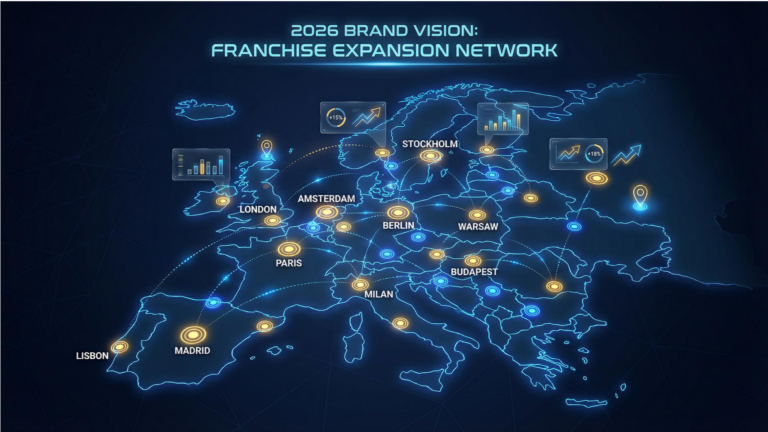
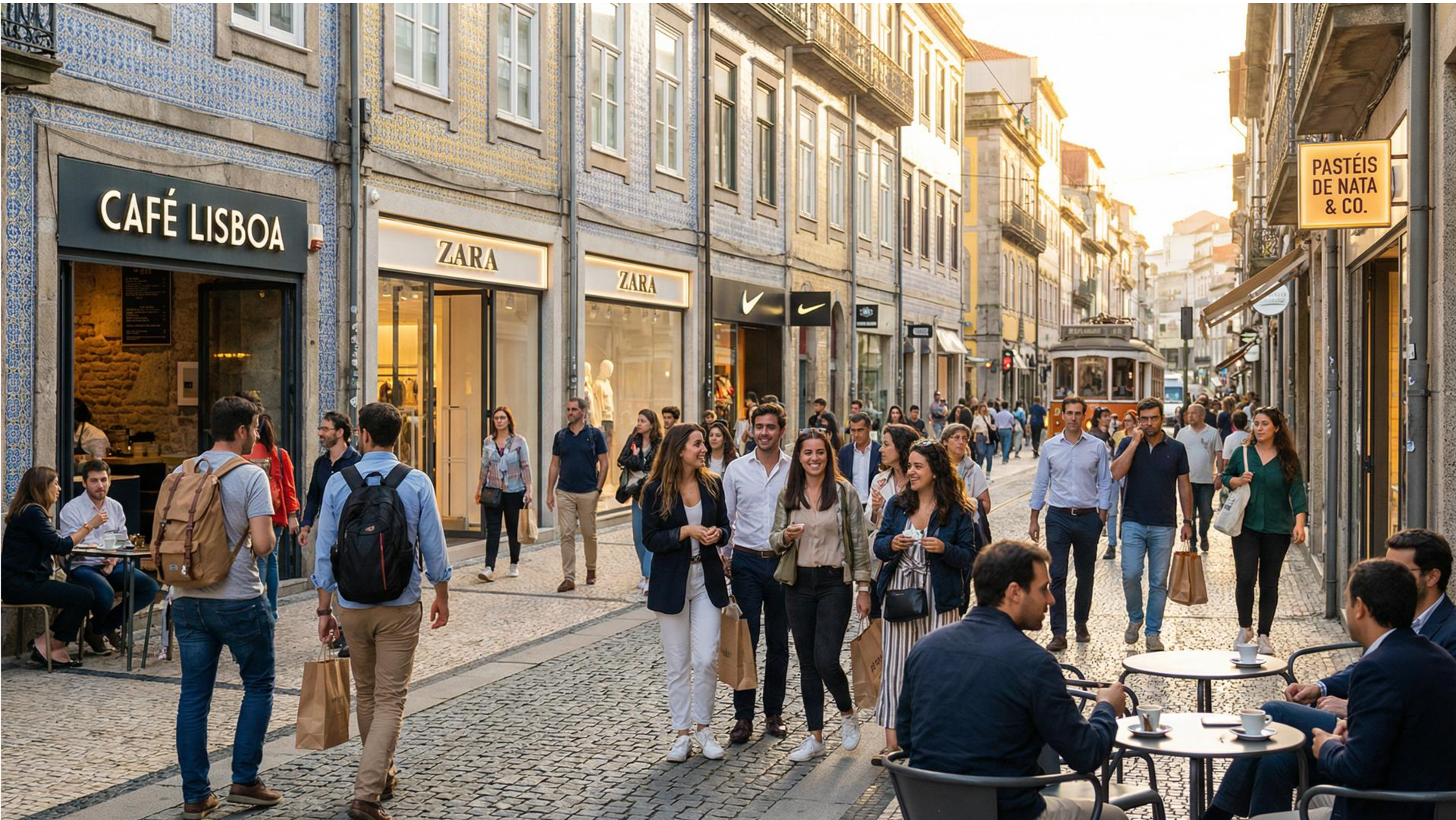
Franchising in Europe is becoming one of the most compelling growth opportunities for ambitious brands. Maybe you have already built a strong local concept, a bustling café, a popular fitness studio, a distinctive retail brand, or a thriving service business. As you look beyond your home market, Europe offers scale, diversity, and momentum that few regions can match.Franchise brands in Europe now generate over €300 billion annually[1], employing millions and spanning thousands of concepts. This article makes the case that Europe is a growth goldmine hiding in plain sight – a franchise market that’s far more fertile and ambitious than many realize. We’ll explore why Europe offers unique advantages for franchisors, where the real expansion is happening (by region, sector, and trend), and highlight success stories of brands thriving across European markets. In the end, it’s clear that now is the time to take a closer look at Europe – and we’ll touch on how the right partner can help franchisors navigate a multi-country European rollout.
Europe’s Untapped Franchise Potential: A Giant Hidden in Plain Sight
On paper, Europe should be the star of international franchising. It’s home to over 450 million consumers, a combined economy of nearly €16 trillion, and world-class infrastructure[2]. However, its franchise sector remains under-penetrated compared to markets like the United States. Consider that franchising accounts for only about 2% of Europe’s GDP, versus around 10% in the U.S.[3]. In other words, Europe’s franchise industry has plenty of headroom to grow to U.S. levels of economic impact. This gap suggests a huge opportunity – an underrated market ready to blossom as franchising becomes more prevalent.
Indeed, many European industries are still dominated by independent operators, with chain franchises holding a relatively small share. In the restaurant sector, for example, chain ownership makes up over 40% of the market in the U.S., but in most European countries it’s under 10%[4]. What does that mean? Simply put, Europe has far less saturation by franchises, leaving vast “white space” for new brands to establish themselves. Lower competition from chains – combined with often lower real estate costs outside a few prime cities – can translate into strong unit economics for franchises willing to expand in Europe[4].
Yet Europe is sometimes dismissed as complex or mature. Yes, the continent is diverse – dozens of languages, varying regulations, and established local players – but this diversity is precisely why it’s a goldmine for franchising. Unlike a single-monolith market, Europe offers a mosaic of niches and needs. A concept that may be commonplace in Paris could be a novelty in Prague; a service that’s saturated in London might have untapped demand in Lisbon. Global franchisors are discovering that Europe is “a continent primed for opportunity” where fresh markets, strong local partners, and long-term potential abound[5]. In short, Europe’s fragmentation is fertile ground – a chance to plant the right concept in the right market and watch it flourish.
And don’t be fooled by Europe’s stable, developed-economy image – growth is very much on the menu. Europe’s franchise landscape is expanding steadily, with some markets posting double-digit growth. For instance, Portugal was Europe’s fastest-growing franchise market in 2024 with a +20% annual growth rate[6], and countries across Eastern and Southern Europe are accelerating their franchise development. Overall, franchising in Europe is booming in 2024–2025, with over 180,000 franchise outlets across ~24,600 brands and about 2.6 million jobs – making it one of the world’s most mature yet resilient franchise markets[7]. These numbers underscore the continent’s scale, even if the full potential is still unfolding. Europe is a sleeping giant that savvy franchisors are now waking up to.
Unique Advantages of Franchising in Europe
Why should business owners and franchisors be excited about Europe? In addition to its sheer size, Europe offers a mix of advantages that few other regions can match. Here are some of the unique strengths that make Europe an ideal arena for franchise expansion:
- Diverse Markets, Unified Opportunity: Europe’s diversity is a franchisor’s playground. With 40+ countries, each with its own culture and consumer habits, the continent allows brands to find their perfect fit. From the luxury-focused boutiques of Paris to the value-driven outlets in Poland, there’s a market for nearly every concept. Crucially, Europe’s diversity comes with a high collective payoff – roughly 500 million consumers with strong purchasing power[8][2]. Successful franchisors treat Europe not as one market, but many opportunities under one roof. And thanks to common EU standards (from product regulations to safety codes), adapting to each country is easier than it once was. A brand that refines its model in one European country can often transfer those lessons to neighboring markets with relatively minimal friction.
- Rising Demand Beyond the Capital Cities: It’s not just London, Paris, and Berlin – Europe’s second-tier cities are booming and hungry for new brands. Major capitals can be fiercely competitive (London and Paris have a heavy concentration of well-known chains[9]), but the real growth is often in mid-sized cities and regional hubs that have fewer established franchises. These cities – think Lyon, Lille, Valencia, Kraków, or Manchester – boast growing middle classes, lower rent costs, and consumers eager for the latest retail and dining experiences. As big brands reach saturation in primary cities, they’re expanding into these underserved areas where consumer spending is rising and competition is thinner. The result? Franchises that might struggle to stand out on the Champs-Élysées can thrive in Lyon or Toulouse. Europe’s broad geographic spread means franchisors can scale up by tapping dozens of prosperous metro areas beyond the usual suspects. In short, the road to growth may run through Europe’s “hidden gem” cities that are rapidly catching up in taste and demand.
- Regulatory Harmonisation and a Single Market: One of Europe’s secret weapons is the EU Single Market, which allows the free movement of goods, services, and capital across 27 countries. For franchising, this means a concept proven in one EU country can expand to others without hitting trade tariffs or completely new standards. Regulatory harmonization has come a long way: franchisors can register an EU-wide trademark once and get protection across all member states[10], and they benefit from generally aligned consumer protection and competition laws. While each country still has its legal nuances (for example, France’s disclosure laws or Spain’s franchise registry[11][12]), the overarching business environment is far more unified than many realize. Moreover, Europe’s world-class infrastructure – from high-speed rail and highways to robust banking systems – makes multi-country operations smoother. Logistics and supply chains can be managed regionally (many brands base distribution hubs in centrally located countries like the Netherlands[13]). In essence, Europe offers continent-wide scalability: franchisors can dream beyond one country, knowing that crossing into the next is not a leap into the unknown but a step on common ground[14].
- Skilled Talent and Investor Appetite: Europe’s workforce and investor community add another layer of advantage. The continent enjoys a skilled, multilingual workforce that can move freely across borders[15] – a huge plus when scaling franchises that need trained managers and staff in multiple countries. You’ll find employees in Northern Europe who speak fluent English, French, German and can be reallocated to open new units, or regional master franchisees who bring local expertise. At the same time, investor appetite in Europe for franchise concepts is growing. Private equity and venture investors increasingly view franchise networks as attractive, stable investments – in fact, strong European franchise brands often command high valuations, with buyers willing to pay 6×–12× EBITDA for high-performing concepts[16][17]. There’s also a surge in entrepreneurs eager to become franchisees: as Europe’s economies enjoy rising consumer confidence and a growing middle class, more individuals are looking to be their own boss through franchising[18]. Many corporate professionals leaving traditional careers see franchising as a safer route into business ownership[19]. This combination of available capital, eager franchisees, and proven ROI makes Europe a fertile funding ground for franchisors ready to grow.
- Mature Support Systems: Europe isn’t a new frontier – it’s a mature franchise ecosystem that offers plenty of support for newcomers. Many countries (like France, the UK, Germany, Spain, etc.) have decades-old franchise associations, consultancies, and legal experts that have fine-tuned best practices[20]. Franchisors expanding in Europe can tap into local advisors for everything from adapting menus to local tastes, to navigating labor laws or finding reputable master franchisees. The knowledge base is deep. Importantly, this maturity lends credibility: governments and financial institutions in Europe understand franchising well, which means easier access to financing and smoother regulatory compliance in most cases. In short, Europe has a ready-made franchising infrastructure – you’re plugging into a well-oiled machine, not bushwhacking into the wild. That stability gives both franchisors and franchisees confidence to invest and expand further.
Where the Real Growth Is Hiding in Europe
So where exactly are the hottest opportunities in Europe? The truth is that growth is not uniform – certain regions, sectors, and consumer trends are driving outsized franchise expansion. Below, we shine a light on where the real growth is happening across Europe right now:
Emerging Regional Hotspots
While Western Europe’s big economies (Germany, France, UK) are stalwarts of franchising, some of the fastest growth is coming from Central and Eastern Europe. Markets like Poland, the Czech Republic, Hungary, and Romania are seeing rapid franchise development, thanks to rising incomes and relatively low market saturation[21]. These countries offer a “first-mover” advantage for brands willing to localize and invest early. For example, in parts of the former Yugoslavia (e.g. Serbia, Croatia), franchise growth is accelerating alongside EU integration and infrastructure upgrades[22]. Croatia’s retail, food service, and home-service sectors are expanding quickly, with homegrown franchises innovating and even eyeing international expansion[23]. As one regional expert noted, “Croatia and our region offer first-mover advantages for quality brands ready to adapt to local markets. Now is the time to seize the opportunity”[24].
Southern Europe is also rebounding. Spain is already a top-five global franchise market, with a long history of successful chains, but now Portugal, Greece, and Italy are stepping up as growth markets. Portugal in particular posted a 20% jump in franchise sector growth in 2024[6], making it one of the fastest-growing in Europe. These southern markets, bolstered by tourism and recovering economies, show high demand for hospitality, food, and fitness franchises[25]. Even in Italy – traditionally seen as a complex market – franchise expansion is picking up speed (despite cultural/regulatory nuances)[26]. Meanwhile, the Nordic countries (Sweden, Norway, Denmark, Finland) quietly offer high spending power and tech-savvy consumers, making them ripe for concepts in digital services and health/wellness[27]. And one must not forget the powerhouse in the middle: Germany. As Europe’s largest economy, Germany boasts a franchise market worth about €147 billion in annual turnover[28]. German consumers are driving demand in sectors like senior care, tutoring, and B2B services – areas that cater to an aging population and a robust small-business base[28]. In short, the real regional growth is hiding in places some franchisors haven’t traditionally looked: the East, the South, and the smaller countries that are now eager to catch up with their western neighbors.
High-Growth Sectors and Trends
Franchising in Europe is no longer just about fast food and fashion boutiques. The growth engines are now a broad mix of industries aligning with evolving European lifestyles. Food & Beverage franchises still lead in sheer size (over 42% of global franchise units are F&B, and Europe follows that trend)[29]. But beyond the familiar fast-food giants, we see new concepts thriving – from artisanal bakery cafés to vegan fast-casual eateries – meeting Europe’s taste for quality and authenticity. Notably, delivery-first restaurant models and ghost kitchens are spreading in Europe’s cities, capitalizing on the boom in food delivery apps and urban convenience[30].
The services and wellness sector is Europe’s rising star. In fact, service-oriented franchises (think fitness, wellness, education, personal care) are expanding faster than traditional retail formats[31]. Take personal wellness: in France, personal services franchises (such as beauty salons, fitness studios, childcare, etc.) saw outlet counts surge 40% in 2023, with sales up 45% – a staggering growth rate[32]. This reflects a broader societal shift: Europeans are increasingly health-conscious and time-strapped, seeking out convenient fitness options, spa and beauty services, and tutoring or daycare services. Franchises are stepping in to meet that demand. A striking example is fit+, a German fitness franchise that runs staffless, 24/7 gyms powered by technology. Fit+ has grown to 250 clubs and 87,000 members and is projecting over €30M turnover as it prepares for international expansion[33]. Its success underscores how digital-first, flexible service models are resonating with Europe’s urban populations[34].
Other growth sectors include education and training franchises – from kids’ tutoring centers to professional skills academies – thriving as families invest in extra education and workers seek to reskill[35]. B2B and “business services” franchises (everything from cleaning and maintenance to consulting and coaching) are also on the rise, buoyed by Europe’s large base of small businesses needing outsourced services. For instance, demand for senior care and healthcare services franchises is climbing in countries like Germany and the UK, where aging populations require more in-home care, medical support, and assisted living solutions[28].
A few niche trends are worth noting too. Pet care franchises are flourishing as pet ownership increases and owners spend more on grooming, training, and veterinary services[36]. Experiential entertainment – think escape rooms, VR gaming cafés, and themed attractions – is capturing younger consumers’ leisure spending across Europe[36]. And cross-cutting almost every sector is the push for sustainability and tech integration. European consumers value environmental responsibility; hence, franchises that offer eco-friendly products (like organic food, sustainable retail goods) or green services (e.g. low-waste car washes, solar panel installation franchises) are gaining traction. Likewise, a strong omnichannel or digital component is becoming a must-have – whether it’s mobile ordering for restaurants, apps for fitness classes, or online platforms for education – to meet Europeans on their smartphones[37]. Brands that are fast, healthy, sustainable, and tech-savvy are not just growing; they’re defining Europe’s next chapter of franchising[38].
Demographic Drivers
Underlying these sector booms are demographic shifts that spell opportunity. Europe’s middle class is expanding in developing markets, adding millions of new consumers who aspire to global brands and modern services[39]. As countries in Eastern Europe grow richer, a new generation of consumers is flocking to franchises – whether it’s a trendy café or a proven automotive service – as markers of convenience and quality. Simultaneously, the established markets of Western Europe remain wealthier than ever, sustaining premium franchise concepts (from gourmet burger bistros to high-end fitness studios) thanks to high disposable incomes and brand-conscious shoppers[39].
Additionally, as mentioned, Europe’s aging population creates need for senior-focused franchises (home care, medical clinics, senior fitness), while its tech-native youth drive demand for digital businesses and fresh dining or retail experiences. Importantly, entrepreneurship is on the rise among Europe’s younger professionals – many of whom prefer franchising as a guided path to business ownership. The post-pandemic era has seen a spike in people seeking “turnkey” businesses that offer independence with safety nets, which franchising uniquely provides[40]. All these demographic undercurrents – middle-class growth, aging seniors, digital-savvy millennials, and new entrepreneurs – are fueling the franchise expansion in their own ways, contributing to an overall European franchising growth rate of around 4–5% annually expected in coming years[41].
Success Stories: European Franchise Brands on the Rise
Nothing illustrates Europe’s franchise potential better than the brands that are already thriving across the continent. While many American names (from McDonald’s to Subway) have long found success in Europe, it’s the home-grown and regional heroes that truly showcase what’s possible. Here are a few examples of successful franchise expansion within Europe – notably, these are mostly non-U.S. brands, proving Europe can produce and scale winners on its own turf:
- Gregory’s Coffee (Greece): What started as a local Greek coffee and snack chain has exploded into a regional powerhouse. Gregory’s now operates 353 stores and generates nearly €80 million in revenue, earning a spot among Europe’s top ten coffee shop chains[42]. Its recipe for success: offer quality espresso and fresh food with a quick-service model attuned to local tastes (Mediterranean snacks, etc.), then expand methodically. Gregory’s has shown that a home-grown concept can scale successfully across borders – in this case, spreading from Greece into nearby European markets – by combining cultural familiarity with franchise discipline.
- Calzedonia (Italy): Italy is known for fashion, and Calzedonia leveraged that heritage to build an international franchise empire in legwear and swimwear. With its affordable, stylish hosiery and beachwear, Calzedonia grew via franchising across Europe and beyond. New franchisees can start a Calzedonia store for an initial investment around €90,000, which then yields average annual sales of €500,000–€600,000 per store[43]. Those solid unit economics have attracted entrepreneurs globally. Today Calzedonia shops are common in high streets from Spain to Poland. The brand’s success underscores how European franchises in the retail/fashion sector can expand internationally by offering a well-defined niche product at accessible prices – blending trendiness with a proven system.
- Spar (Netherlands): One of the world’s largest supermarket franchises actually began in Europe. Spar was founded in the Netherlands in 1932, and its cooperative franchise model of local grocery stores proved so effective that Spar now boasts 13,000 stores in 48 countries[44]. That includes hundreds of locations across Europe (for example, 900+ stores in France alone) with annual sales per outlet often in the millions[44]. Spar’s story is a testament to Europe’s ability to export franchise concepts globally. By adapting to local needs (each Spar is tailored to its community) while maintaining efficient supply chains, this European brand scaled to every continent. It remains a case study in multi-country franchise management, all rooted in a European concept.
- Dreams Donuts (Belgium): A newer entrant, Dreams Donuts shows how even small, inventive concepts can catch fire in Europe. This boutique Belgian doughnut café started with one shop and quickly franchised its model of gourmet, eye-catching donuts. With a relatively modest franchise fee (around €34,999 entry cost)[45], it lowered barriers for franchisees and expanded to 50+ outlets across Belgium and France[46] within a few years. Dreams Donuts capitalized on a gap in the market for trendy dessert spots, proving that European consumer demand for novel, Instagrammable treats is strong. Its cross-border growth into France also illustrates that if a concept works in one European market, nearby countries with shared tastes are ripe for expansion.
- fit+ (Germany): Mentioned earlier as a rising star in fitness franchising, fit+ is a German-born brand that’s redefining gyms in Europe. By eliminating staff and using technology for 24/7 gym access and virtual coaching, fit+ drastically cuts operating costs while meeting modern consumers’ desire for flexibility. The model has resonated so well that fit+ now has 250 clubs domestically and is preparing to expand internationally[47]. This growth demonstrates how health and wellness franchises can boom in Europe by aligning with health trends and convenience – and that innovation in the franchise model (like tech integration) can be a springboard to scale. As fit+ enters other European countries, it’s poised to replicate its success among urban professionals seeking affordable, anytime fitness options.
These case studies barely scratch the surface. From Pret a Manger (the UK sandwich café that’s spread across Europe with its fresh, organic concept)[48], to 5àsec (a French dry-cleaning franchise turned global network) and llaollao (a Spanish frozen yogurt franchise conquering markets worldwide)[49], Europe has no shortage of franchise success stories. The common thread is that each brand understood a local or regional need – whether it was coffee, fashion, convenience retail, sweet treats, or fitness – and built a scalable franchise system to fill it. They then leveraged Europe’s integrated market and ample talent to roll out across multiple countries. For every McDonald’s or KFC coming into Europe, there’s a European brand like Big Mamma (Italian dining concept from France) or La Piadineria (an Italian fast-casual chain backed by investors for expansion) preparing to go the other direction. Franchising truly is a two-way street now, with Europe as both a launchpad and landing zone for global growth.
Conclusion: Unlocking Europe’s Franchise Growth (and How to Navigate It)
Europe, the “underrated” franchise market, is undervalued no longer. The data and trends paint a clear picture: this continent is a powerhouse of franchise opportunity, combining the stability of a mature economy with the excitement of emerging markets. It’s a place where a franchise can scale to hundreds of units and €100M+ in revenue, yet still find untapped cities and sectors for further growth. Europe’s rising consumer demand for convenience, health, and quality – from the big capitals to the small regional cities – is reshaping the franchise landscape daily[50]. In an increasingly interconnected marketplace, Europe stands out as both a lucrative battleground for established brands and a fertile incubator for the next big franchise concepts.
For franchisors and business owners considering expansion, the message is strategic but simple: don’t sleep on Europe. The key is to approach it with insight and preparation. Success in Europe comes from understanding local cultures, adapting to regulatory quirks, and pacing your growth market by market. It can be complex to manage a multi-country franchise rollout – but you don’t have to go it alone. This is where partnering with experienced franchise consultants becomes invaluable. An organization like Franchise Marketing Systems (FMS) Europe can be the difference-maker, providing the on-the-ground expertise in development, operations, and recruitment to guide brands through Europe’s intricacies[51][52]. With a partner like FMS – a team that knows how to navigate different languages, legal systems, and consumer behaviors – franchisors can accelerate their European expansion with confidence.
Europe truly is the world’s most underrated franchise market, but perhaps not for much longer. The real growth is there for the taking – in vibrant cities you may never have visited, in sectors you might not have considered, among customer groups just waiting for what you offer. For those ready to expand their horizon, Europe promises diversity, scale, and profitability that can elevate any franchise to new heights. With the right strategy and the right partner by your side, you can turn Europe’s opportunities into your franchise’s next big success story. Now is the time to stake your claim in Europe’s franchise future – and unlock the growth hiding in plain sight.
Sources
Sources:
- European franchise market size and economic impact[1][7]
- Franchising’s share of economy in Europe vs. USA[3]
- Chain penetration in U.S. vs Europe; unit economics factors[4]
- Europe’s single market advantages for expansion[14][53]
- Regional franchise growth in Portugal, Eastern Europe, etc.[22][6]
- Sector growth data in Europe (F&B, services, retail)[54][55]
- European franchise success examples and case studies[44][42]
- Trends driving European franchising (health, digital, etc.)[30][32]
[1] [5] [6] [14] [15] [20] [22] [23] [24] [26] [27] [28] [30] [35] [36] [37] [38] [39] Franchise growth – the European advantage | Global Franchise
https://www.global-franchise.com/insight/franchise-growth-the-european-advantage
[2] [10] [11] [12] [21] [25] [40] [41] [51] [52] [53] Franchising in Europe: Expanding Your Brand with Franchise Marketing Systems Europe – Franchise Marketing Systems
[3] Document Title
https://eprints.whiterose.ac.uk/id/eprint/95518/1/LUBS_Retail_Sector_Report_final.pdf
[4] [8] Crossing the Pond: The Two-Way Flow of Restaurant Franchising Between Europe and the U.S.
[7] [29] [31] [32] [33] [34] [42] [43] [44] [45] [46] [47] [48] [49] [50] [54] [55] Top franchise sectors driving growth across Europe – Franchising.eu – franchise opportunities in Europe
https://franchising.eu/article/464/top-franchise-sectors-driving-growth-across-europe/
[9] [13] Conquering Europe Requires a Long-term Investment
https://www.franchising.com/articles/conquering_europe_requires_a_longterm_investment.html?ref=RSS
[16] [17] [18] [19] Industry Facts – FMS Franchise EU