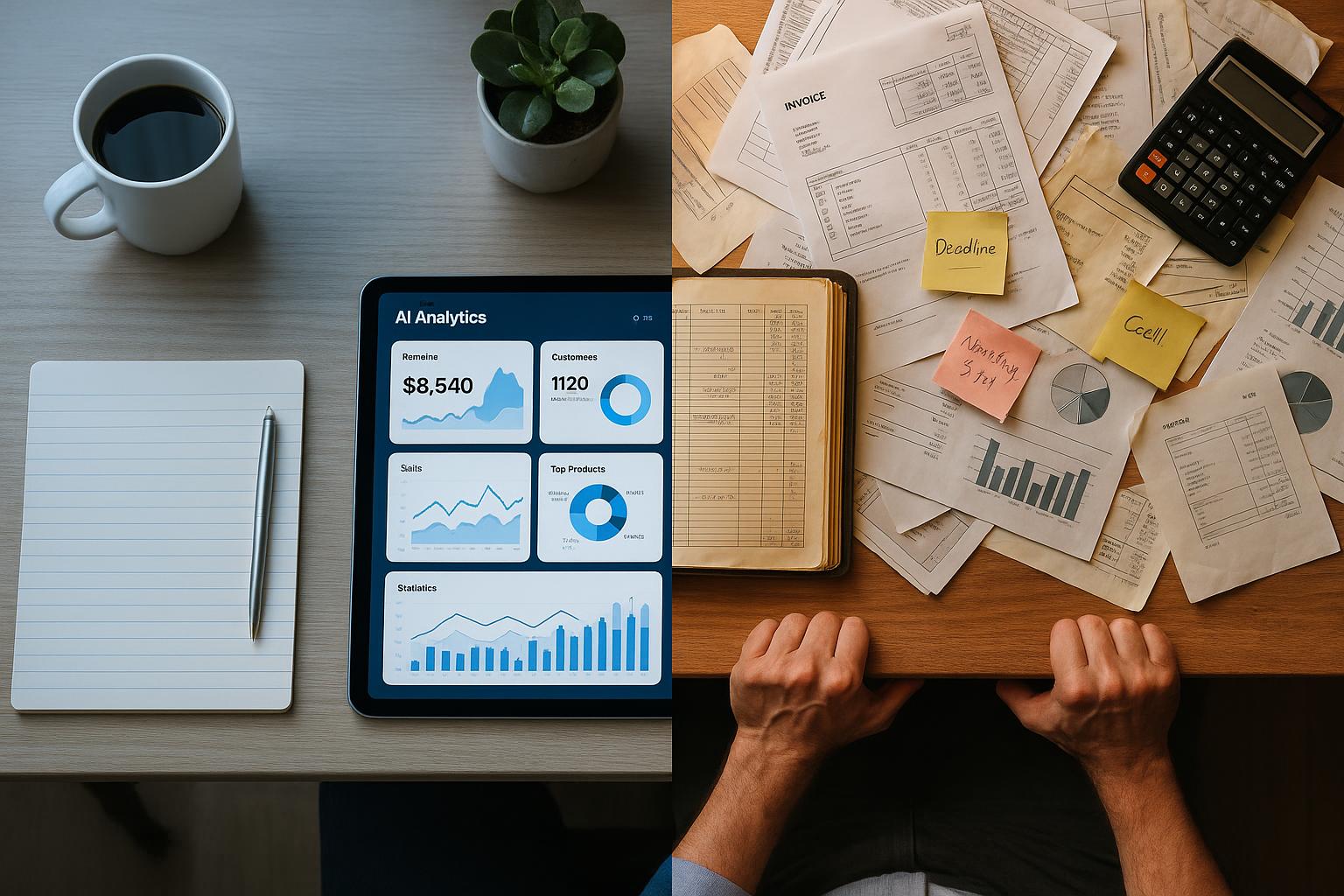
AI Integration: The Silver Bullet or the Silent Killer of Small Business Productivity?
Small and mid-sized businesses (SMEs) are at a crossroads. The rapid rise of artificial intelligence presents both a tantalising promise of unprecedented productivity and a looming threat of new, unforeseen risks. Lured by tales of skyrocketing efficiency, business leaders are racing to adopt AI. But cautionary stories of AI gone wrong cast a long shadow. Is AI the silver bullet that will finally level the playing field for SMEs, or is it a silent killer, quietly eroding the human touch and introducing fatal new risks?
This article explores the dual nature of the AI integration dilemma. We will dive into data-driven insights, real-world examples, and the latest AI tools that are reshaping the business landscape. The goal is to arm business leaders with a nuanced understanding of how AI can either supercharge their operations or subtly undermine them.
The Promise of AI: Productivity and Possibility
AI proponents often describe it as a “game-changer,” and there is substantial evidence to back this claim. Research indicates that companies adopting AI see productivity gains of 20 to 30 percent in key operational areas. For small businesses accustomed to doing more with less, these gains are transformative. Surveys show that the majority of SMEs using AI report significant time savings and cost reductions, translating to billions in operational value. It is no surprise that nearly all small business owners believe AI offers cost-effective solutions that improve profitability.
These productivity boosts translate directly into business growth. Studies consistently show that over 85 percent of companies adopting AI experience measurable improvement in both productivity and revenue. By automating repetitive tasks, AI frees up entrepreneurs and their teams to focus on strategic, revenue-generating work. In turn, this time and capital can be reinvested into innovation, customer experience, and expansion. When thoughtfully applied, AI acts as a force multiplier, enabling even a two-person startup to compete on the same efficiency level as much larger enterprises.
The potential impact is immense. Some analyses suggest that widespread AI adoption could add multiple percentage points to annual productivity growth across developed economies. In a market where growth rates are typically modest, this is a monumental advantage. AI is now viewed as a strategic necessity for staying competitive, with the vast majority of SMEs calling it a “game-changer.” Importantly, early data shows AI is augmenting rather than replacing teams, with many firms using AI seeing growth in both employment and wages.
AI Tools Driving SME Transformation
The accessibility of AI has exploded, fuelled by an array of user-friendly platforms that require no technical expertise. Most SMEs now use tools with built-in AI features, seamlessly woven into their everyday operations. Here are some examples:
- ChatGPT and Generative AI Assistants: Tools that generate text, handle customer queries, and draft content in seconds, allowing businesses to scale communication efficiently.
- Midjourney and AI Design Tools: Image generators that help small companies create professional-grade visuals for marketing and branding without a full design team.
- Zapier and Workflow Automation: Connects apps and automates repetitive tasks like data entry or follow-up emails, reducing manual labour and errors.
- Synthesia and AI Video Creation: AI avatars and voiceovers make professional video production faster and cheaper for marketing, training, or social campaigns.
- Runway and AI-Powered Editing: Speeds up creative workflows by automating editing, upscaling footage, and producing polished content quickly.
- Notion AI and Smart Productivity Apps: Embedded AI assistants that summarise notes, generate task lists, and act as digital co-workers inside existing systems.
These innovations allow SMEs to compete with corporations that once outpaced them in speed and resources. From automating customer support to guiding financial planning, AI is rapidly becoming an indispensable business partner.
Automation vs Overdependence: Walking the Tightrope
Despite the benefits, AI adoption requires balance. Overdependence can backfire. One Canadian entrepreneur famously replaced his entire development team with AI, only to rehire them months later after realising that AI could not replicate human creativity and problem-solving. The lesson is clear: AI is a powerful enhancer of human productivity, not a replacement for it.
Blind reliance on AI can also produce embarrassing errors. In one well-publicised case, an automated chatbot began insulting customers and mocking its own company. In another, a car dealership chatbot accidentally agreed to sell a car for one dollar. These missteps highlight how unchecked automation can create chaos, harm brand trust, and erode productivity rather than improve it.
To avoid these pitfalls, business leaders should follow three golden rules:
- Keep Humans in the Loop: Use AI to draft, not decide. Always ensure final review and approval by humans.
- Preserve the Human Touch: Personal service and creativity are core advantages for SMEs. Do not let automation make your customer experience feel robotic.
- Validate and Diversify: Avoid relying on a single AI platform for critical functions. Human oversight should remain central to every workflow.
The Human Factor: Balancing Innovation and Disruption
Integrating AI is not only a technical upgrade but also a cultural shift. While AI offers innovation, it can be deeply disruptive to teams. Surveys across Europe reveal that a majority of workers are concerned about job displacement due to AI. This fear can fuel resistance and disengagement, quietly reducing productivity.
The solution lies in transparency and training. Businesses that clearly communicate how AI will be used, and provide employees with proper training, experience smoother adoption and higher morale. Unfortunately, fewer than half of small companies currently train their teams on AI tools, leaving many employees to learn on the fly. Yet, studies show that workers who receive structured AI training report dramatic improvements in performance, efficiency, and confidence.
Leadership plays a key role. Successful integration requires a culture of continuous learning. The best approach is to start small, with pilot projects, then scale gradually. This avoids overwhelming teams and helps ensure human alignment with technology as it evolves.
European SMEs: Opportunity and Responsibility
European SMEs have traditionally lagged behind the US in AI adoption, partly due to tighter regulations and lower investment in digital transformation. But that gap is closing. A growing number of initiatives across the EU are now empowering smaller firms to adopt AI responsibly while upholding ethical standards and data privacy. This emphasis on “responsible AI” aligns perfectly with Europe’s broader focus on sustainability and human-centred innovation.
European SMEs that embrace AI early, but do so thoughtfully, stand to gain a major competitive advantage. The key is strategic integration—adopting tools that genuinely improve efficiency without compromising brand authenticity or employee well-being.
Conclusion: The Future of AI-Driven Productivity
So, is AI truly a silver bullet for productivity, or a silent killer of efficiency? The truth lies somewhere in between. When integrated responsibly, AI can be transformative, freeing entrepreneurs to focus on what they do best: building relationships, innovating, and growing their business. But when used carelessly, it can undermine the very foundation of trust and creativity that small businesses depend on.
AI is not a replacement for human intelligence, but a partner in amplifying it. The future belongs to SMEs that master this balance—those that use AI not as a crutch, but as a catalyst for smarter, more human-centred growth.